
Volume 4: There and Back Again and Then Back Out and Also Maybe There Again Another Time, Why Not?
I embark on a Hero's Journey, we review the best and worst in comfort television, and James wears a hat

LÜV: 40K Resolutions
I’m going to be a completely different guy this year. Sharper fashion. Sharper attitude. Dark sunglasses. Fashionable stubble. Veneers.

New Years is exciting like the end of the first act in a Disney movie — time to say I wish and lock in, right before making a series of fatal mistakes that render you voiceless, en-froggened, or in love with a white guy.

I love a resolution even when it’s doomed to fail. Most of the time, we tend to overestimate how good we are at consciously building habits, but making a concrete choice at the beginning of a year reminds you that you’re in the driver’s seat of your own being.
It’s an inconvenient structural truth of a good-ol’ Hero’s Journey that if you set out on a quest to get what you want, the process can only ever return something you need. Fraser called this “Jagger’s Law.”
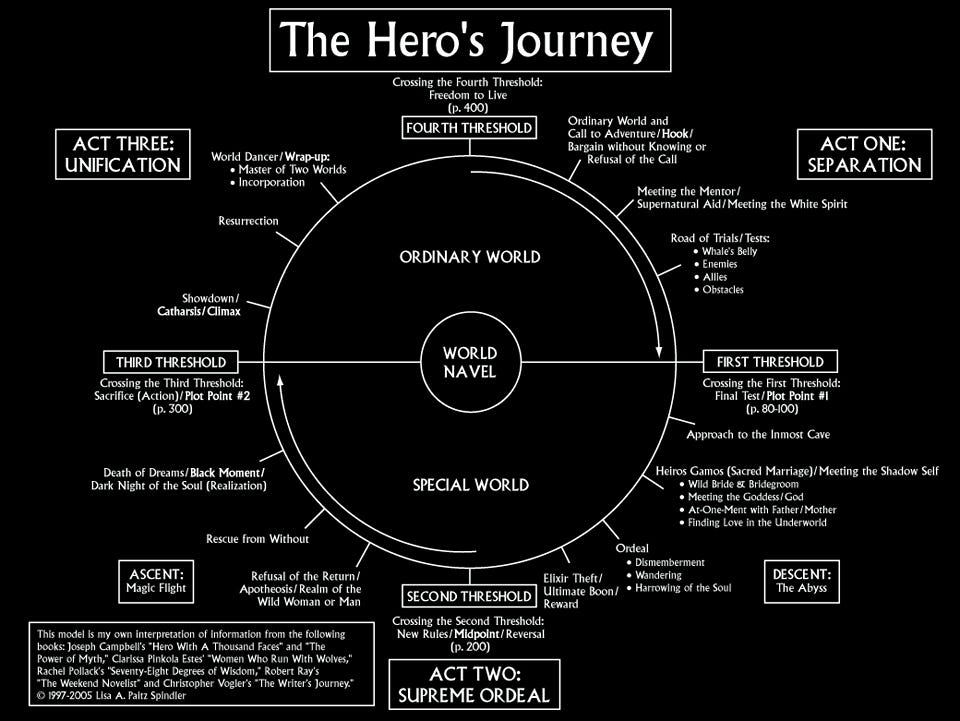
That may sound convenient, boring, or overly trite in its dialectical synthesis, but that’s what makes it a story, not real life. And besides, in case you’ve forgotten while I’ve been AWOL — that’s kind of my schtick here.
HĀT: Ghosts of Christmas Past
Coming home for the holidays turns you into a shadow of your high school self. Still skulking around like a moody teenager, still feeling stared-at in church, still figuring out ways to hide weed from your parents, even though it’s totally legal and even available at the neighborhood 7/11 now, Mom. There’s something almost satisfying about how deliberate that sense of arrested development is — enough that it should give you just the kick in the pants you need to pick up a new pattern on the other side of the vacation.
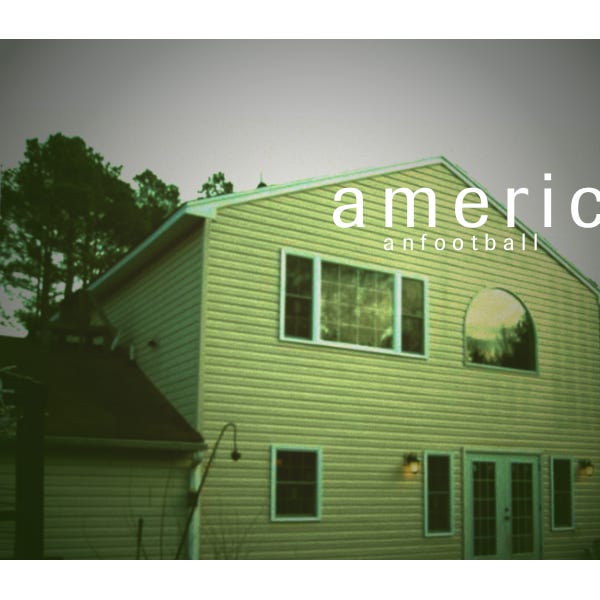
But coming back to the city afterwards turns you into a shadow of yourself from last year. Sure, I arrived with new resolutions, new cooking implements, and a bag of homemade cookies, but coming back to the same tiny place with the same mess (literal and figurative) left over from the previous year reminds you that there’s no such thing as an actual clean slate. Especially if you don’t actually clean.
I’m no longer “just back” from vacation by any sense of the imagination, but I’m somehow still hungover from the last year. Changing a pattern is like turning an oil tanker, and I feel like the damn Suez Canal.

LÜV: The Infinite Procedural
Going home is mostly about catching up with the shows your parents watch.
Every time I go home and go downstairs after like 7 pm, my dad will say something like, “You want to join us? We’re watching Rundgren,” “Just threw on an episode of Beefhorn,” or “Have you seen this show? It’s called Grank.” before pressing play on a Starz show about a grumpy yet lovable cop and his clever daughter that has somehow been running for nine seasons.
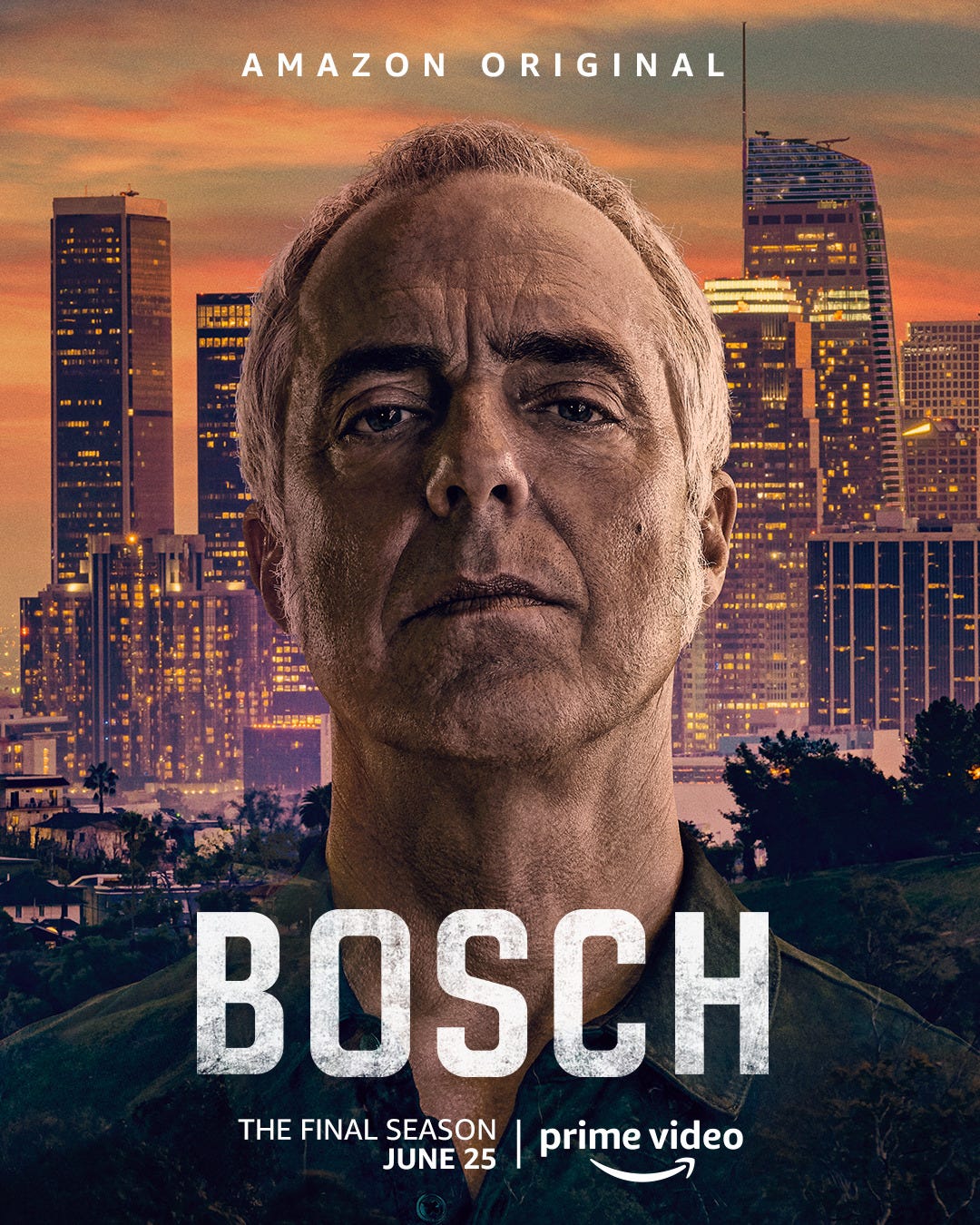
There seem to be infinite versions of this kind of show, each with a one-word title and a gruff, competent man solving what appears to be the same mystery in a vaguely gray location (definitely Vancouver) every week. But even though they’re basically interchangeable and somewhat inexplicable, it’s fun to sit down for an episode or two. Procedurals — even the weird, streaming-flavored ones — let you catch on quick.
These shows exist to build patterns for the viewers and themselves. The individual episodes and overall seasons both follow a formula familiar enough that you can pick it up effortlessly, but malleable enough that the writers can interchange the pieces and keep it fresh from year to year.
No, they’re maybe not the kind of dramas that win Emmys or attract Stans on Twitter, but they’re kind of the platonic ideal of the traditional TV show. Something that builds a bond with its audience not through its premise or the linear progress of its story, but by the way it makes itself into a habit. More than a film, a good, repetitive TV show succeeds off the “Ebert Rule” — “it’s not what [something] is about, it’s how it is about it.”
HĀT: Springfield’s Uncanny Valley
But while the act of repetition is the thing that makes a show really worthwhile, a series can get reeeeeeeal uncanny when it goes on for too long.
Yes, I’m talking about The Simpsons. I can’t believe it refuses to die. I love it this much and I want to choke it to death. So who is left who still has any loyalty to The Simpsons? Who still remembers the 90s?
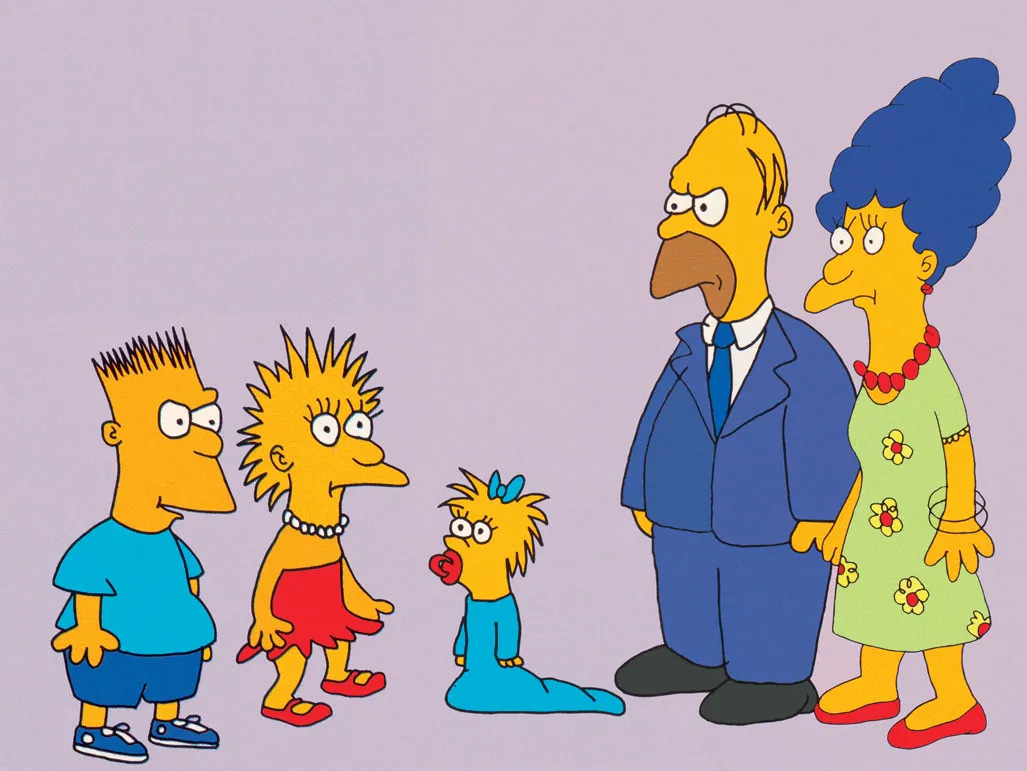
The Simpsons has been bad for decades, but now it’s just eerie. The voices are the worst part.
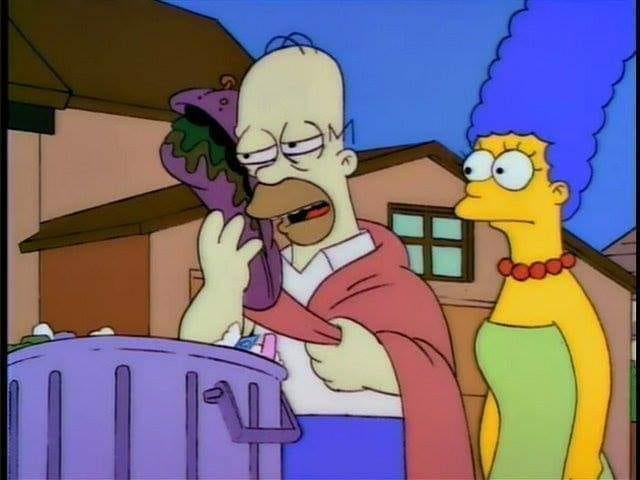
Homer has (somehow, through the forces of temporal wormholing) been rewritten as a millennial, but Dan Castellaneta sounds like he’s 65 because he is. You can hear Julie Cavner’s vocal cords disintegrating every time she speaks as Marge. And while Hank Azaria’s voiceover skills are prodigious, they get significantly nerfed when he can’t do racial impressions.

It must only exist out of pure inertia, like it’s more work to stop making the show than it is to bring it to a close. I hope the viewers approach it with a similar feeling — not that they’re too attached to Bart and Lisa to say goodbye, but simply that they’ve cared so little for so long that it would be too much effort to pick up a new show they give a shit about.
Over time, the things producers do to keep a show in stasis — keeping the same voices and same characters for decades past their prime — can end up morphing it unrecognizably far away from the appeal of the original project. Sometimes, you just need to let the sandwich go.
LÜV: Top Gear
Watching the Simpsons is depressing, so I needed a different nostalgia kick.
Top Gear brings me back to childhood, crowding around the desktop computer in the rental house on Military Ave, laughing at episode after pirated episode.
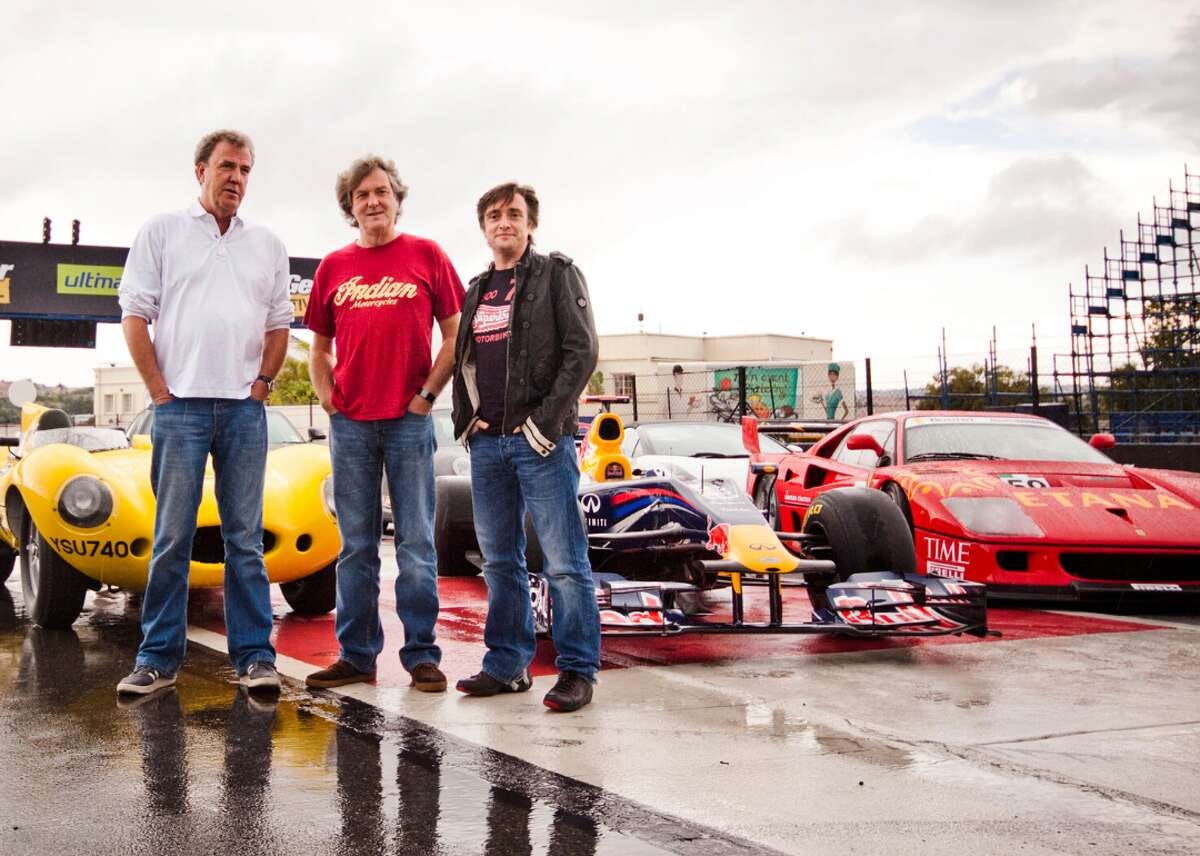
While ostensibly an automotive review/panel show, at least at first, Top Gear grew its reputation largely through its special features — massive global trips in pieced-together cars, indulgent cross-continental supercar races, and any excuse they could find to blow things up.
But while I was always wowed by the specials as a youth, the thing that drew me to a rewatch was the show’s structure of segments, the bits that came up every episode and made the whole series easy to consume en masse. When you need comfort television, the most important part is the rhythm that it lets you settle into.
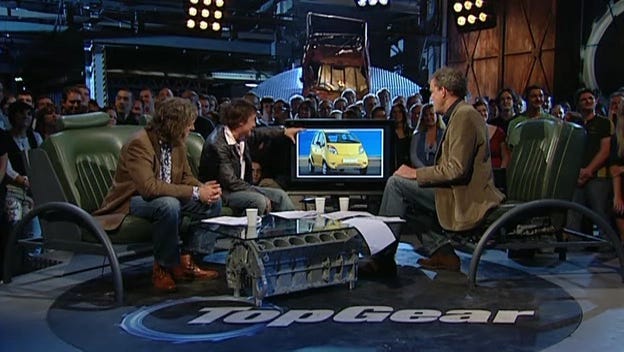
As the show passed its prime, it morphed almost seamlessly into its pseudo-sequel The Grand Tour. This series did away with the panels and topical commentary and instead focused entirely on the high-budget, hyper-indulgent special segments — basically creating Top Gear, the “good parts edition.”
It’s not the version of the show I prefer. Without the pedestrian rhythms of the regular segments, the big, high-budget moments feel less like a payoff and more like the whole, flashy substance of the show. But in an era where streaming tends to elide “event content” and “comfort content” into one big mass of hyper-expensive, under-written flashing lights, it’s useful to see the two divided into discrete objects with different purposes.
Bombast always grabs the attention the first time through. But there’s a reason I’m rewatching Top Gear and not The Grand Tour.
HĀT: The Infinite Scroll
There’s something a little nostalgic about TV in a world of TikTok. It’s such an addictive, clearly brain-rotting app that it actually makes TV feel healthy by comparison — it’s like I’m making the smart choice by watching those nine episodes of 30 Rock.

Like television, the infinite scroll of the algorithm wants to keep you watching forever. But while TV shows exist in bounded half-hour and hour long segments with internal conclusions, scrolling times have no sense of narrative progress. The algorithm doesn’t consciously build arcs into your screentime or create a story climax when it’s time to wrap up. Without these lodestones, it can become impossible to get a sense of when you’ve had enough.
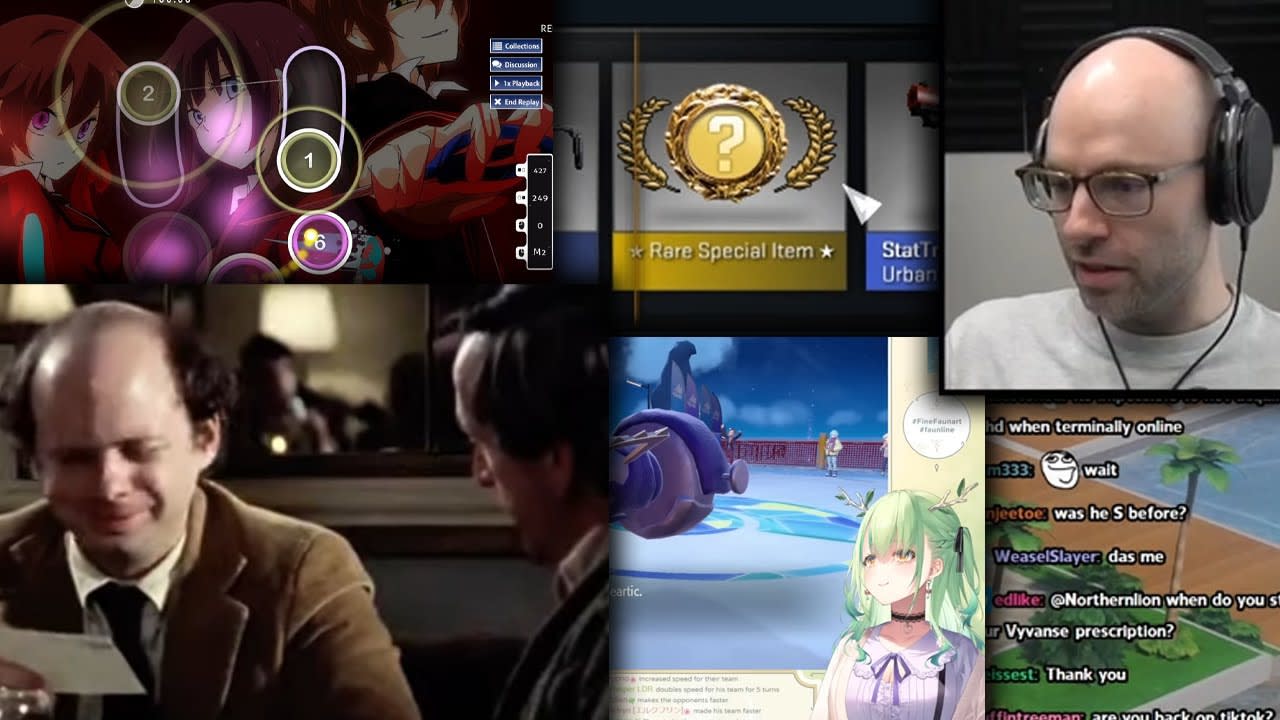
It’s one of my New Years resolutions to cut down as much as possible on the infinite scrolling. But sometimes it happens without thinking, like a reflex. Without the concrete stories that come from real, written-out entertainment, there’s no need to truly invest your attention into what you’re watching — you can just open the app and get back to the hard work of vegging out.
I do think, like people who got alarmist over televisions in the house, people who get overly alarmed about infinite scroll underestimate our ability to adapt, artistically. It took TV decades of shit like Leave it to Beaver, but it did eventually craft a unique artistic form with patterns and ideas and symbols all its own. If the infinite scroll is the medium of the future, then we’ll eventually grow familiar enough with its patterns and limitations to make great art out of it — that’s the nature of art and the nature of artists. But for now, until TikTok becomes something that can be made and consumed with intention, it’s my resolution (even if it fails) to switch to something better.
Like Bosch. My dad says it’s good, at least.